PressurePave® is designed to rehabilitate distressed pavement by treating cracks, voids, and surface irregularities while creating a new finished driving surface over the existing roadway.
One of the most important benefits of addressing cracking early is reducing the opportunity for water to enter the pavement structure and contribute to further deterioration.
Understanding the Failure
Potholes Usually Start With Something Smaller.
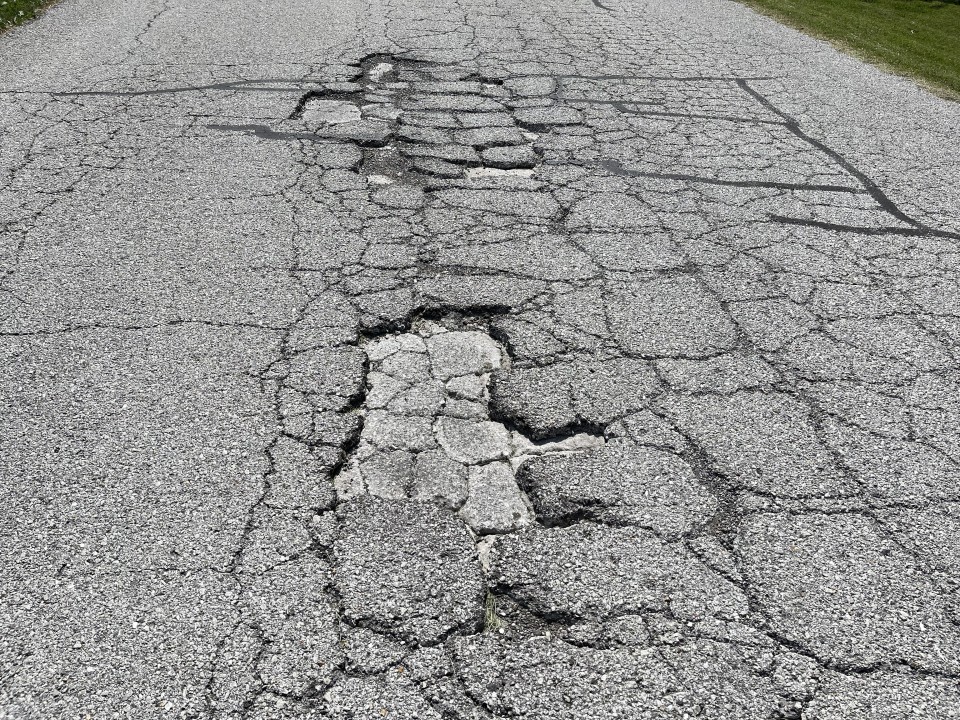
A pothole rarely appears overnight without warning. Pavement deterioration typically begins with smaller forms of distress, such as cracking, raveling, weakened areas, or movement within the pavement structure.
Once a crack forms, it can create a pathway for water to move beneath the surface.
Traffic continues loading the pavement while temperature changes, moisture, and movement act on the weakened area. Over time, material can loosen, the pavement can lose support, and pieces of the surface can break away.
Eventually, the localized failure becomes what drivers recognize as a pothole.
Why Water Matters
Water is one of the most important factors in pavement deterioration.
Cracks allow moisture to enter areas that were originally protected by the pavement surface. Once below the surface, water can contribute to weakening of the pavement structure and underlying materials.
Seasonal temperature changes can make the problem worse. In climates where freezing occurs, water within pavement cracks and weakened areas can expand and contract during freeze-thaw cycles, placing additional stress on the surrounding pavement.
Even without freezing, repeated moisture exposure combined with traffic loading can accelerate deterioration.
Rehabilitation Before Failure
How PressurePave® Addresses Distressed Pavement
PressurePave® is designed to treat distressed pavement while enough of the existing roadway remains viable for rehabilitation.
During installation, the system pressure-injects material into cracks, voids, and irregular areas of the existing pavement.
That material forms a stress-absorbing mastic layer beneath the finished driving surface.
The pavement is then finished with the MAQS® driving surface during the same continuous operation.
Sealing Existing Distress Helps Protect What Remains.
PressurePave® can help reduce the progression toward pothole formation by filling and sealing existing cracks and distressed areas before those defects continue widening and deepening.
By reducing pathways for water infiltration and creating a new protective surface over the existing pavement, the system helps preserve the remaining roadway structure.
The stress-absorbing mastic beneath the finished surface also helps stabilize cracked areas and manage movement between the existing pavement and the new driving surface.
An Important Distinction
PressurePave® Is Not Simply a Pothole Patch.
There is an important difference between repairing an isolated pothole and rehabilitating a roadway that is showing widespread deterioration.
A pothole patch addresses a localized failure after the pavement has already broken apart.
PressurePave® is intended to address the broader distressed pavement surface and help slow the progression of cracking, water infiltration, and surface deterioration before additional localized failures develop.
Some Roads Are Already Beyond Surface Rehabilitation.
PressurePave® cannot restore structural capacity that no longer exists.
If a roadway has severe base or subgrade failure, significant settlement, major drainage problems, or other structural issues, those problems may need to be repaired before a rehabilitation treatment can provide the desired service life.
That is why pavement condition and structural evaluation are so important before selecting any treatment.
Pavement Management
Preventing Failure Is Usually Better Than Chasing It.
Roadway maintenance becomes increasingly expensive as pavement deterioration advances.
Early preservation treatments are generally less intensive than rehabilitation. Rehabilitation is generally less intensive than reconstruction.
Once potholes become widespread symptoms of deeper structural deterioration, the number of available treatment options begins to shrink.
That makes treatment timing one of the most important decisions a pavement manager can make.
What Happens After Rehabilitation?
Preventing additional deterioration is only valuable if the finished pavement continues performing over time.
Donelson Construction continues to document older PressurePave® roads to observe how treated pavement responds to traffic, weather, cracking, and long-term surface aging.
Those observations help show whether cracks remain sealed, how the finished surface changes over time, and how the roadway performs years after construction.
The Bottom Line
The Goal Is to Intervene Before the Road Falls Apart.
PressurePave® cannot guarantee that a roadway will never develop another pothole, and it is not intended to replace reconstruction where major structural failure already exists.
Its value is in addressing distressed pavement while the roadway can still be rehabilitated.
By treating cracking, sealing distressed areas, reducing water infiltration, stabilizing the existing surface, and providing a new finished driving surface, PressurePave® can help slow the chain of deterioration that often leads from cracks to localized pavement failure.
In other words, the best pothole strategy may not begin with the pothole at all.
It begins by treating the road before the pothole has a chance to form.