PressurePave® Injection
The system forces patented material into cracks, voids, and distressed areas in the existing pavement.
Patented Pavement Rehabilitation Technology
Treat the Cracks Beneath the Surface.
PressurePave® pressure-injects our patented stress-absorbing mastic into distressed pavement while applying a durable MAQS® driving surface during one continuous operation.
A closer look at the technology
Hear directly from PressurePave® inventor Mike Donelson as he explains the patented pressure-injection process and demonstrates how the sealant is applied to distressed pavement.
Demonstration with Mike Donelson
This demonstration isolates the sealant application so you can see the part of the PressurePave® process that is normally hidden beneath the finished roadway.
The complete system
This animation illustrates how the system fills pavement distress, forms the stress-absorbing layer, and creates the finished MAQS® driving surface.
The system forces patented material into cracks, voids, and distressed areas in the existing pavement.
The injected material forms a flexible, water-resistant layer designed to remain beneath the finished surface.
The durable MAQS® wearing surface is applied during the same continuous operation.
Physical evidence
The animation illustrates how PressurePave® material moves into existing pavement distress. The pavement cutout shows that stress-absorbing sealant remaining beneath the finished MAQS® surface.
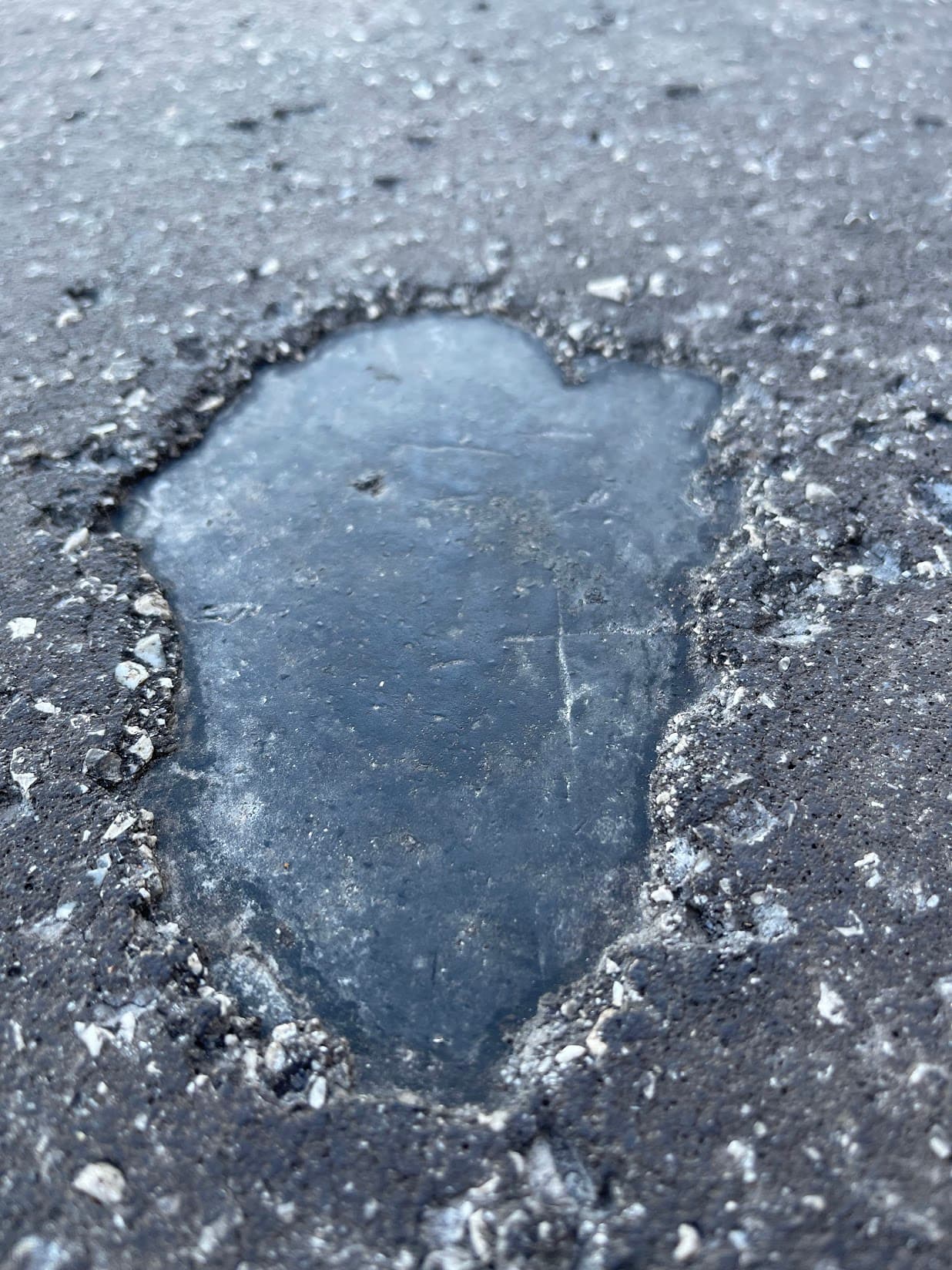
PressurePave® does more than create a new driving surface. Its patented material remains beneath the MAQS® surface and within distressed areas of the existing pavement.
More than asphalt emulsion
PressurePave® is sometimes mistaken for a conventional emulsion treatment. The side-by-side demonstration shows why that description is inaccurate.
Our patented sealant contains numerous components selected to work together inside the distressed pavement. The formulation is designed to bind within cracks and voids, resist water infiltration, and remain capable of accommodating pavement movement.
Conventional emulsion and PressurePave® sealant shown side-by-side.

See how the PressurePave® system is designed to manage stress and pavement movement beneath the driving surface.
Engineered beneath the wheels
Vehicle loading, thermal expansion, contraction, and existing pavement movement continually place stress on a road.
The stress-absorbing mastic beneath the MAQS® driving surface is designed to help distribute those forces rather than allowing stress to remain concentrated directly along the original crack.
PressurePave® does not claim to eliminate all future pavement movement. Its purpose is to manage that movement while helping keep the original pavement sealed beneath the driving surface.
Choosing the right treatment
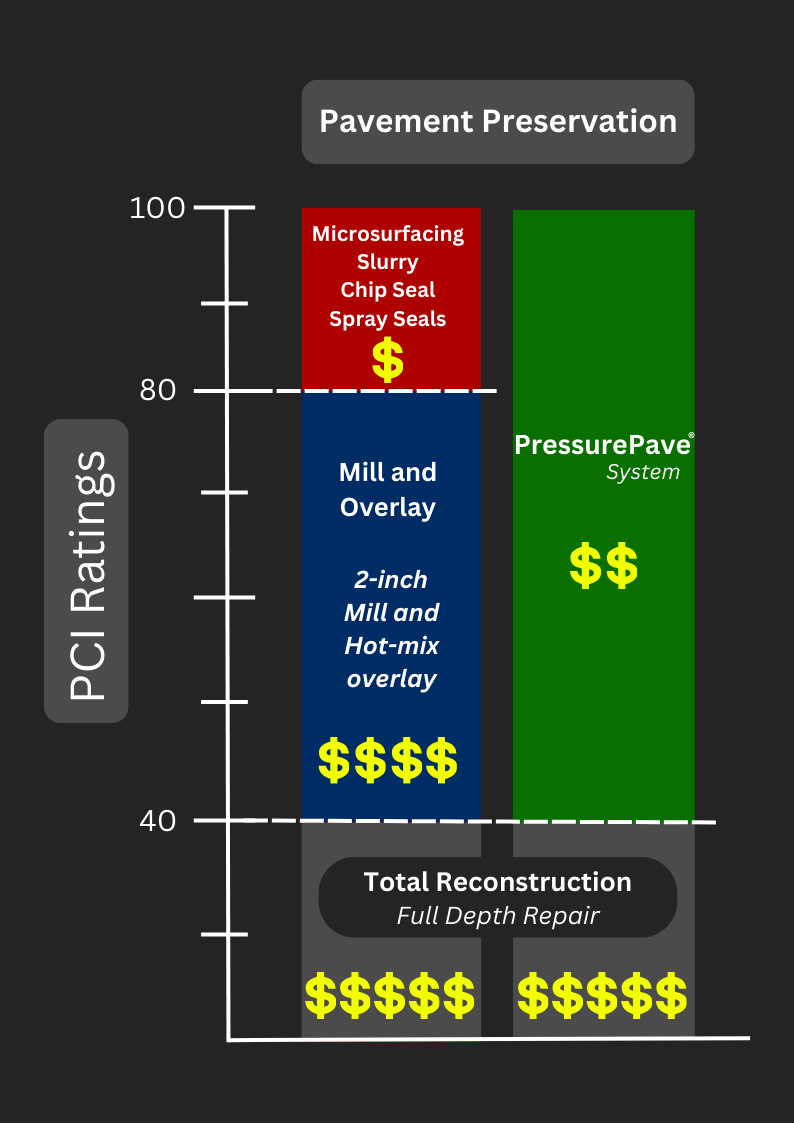
Pavement condition matters. PressurePave® is intended to expand the range of roads that may be considered for preservation instead of immediate reconstruction.
PCI 40+
Many conventional preservation treatments are generally reserved for pavements in relatively good condition. PressurePave® may be considered for pavements with a PCI of approximately 40 and above when the roadway does not have disqualifying structural or subgrade failures.
Treatment selection should always account for pavement structure, traffic, drainage, existing distress, and project goals.
Learn how pavement condition affects treatment selectionUnderstanding PCI
This short explanation looks at the Pavement Condition Index and why PressurePave® can provide another rehabilitation option for roads that have moved beyond the range of many conventional preservation treatments.
Built on documented surfacing performance
MAQS® has been documented on real municipal roads for more than 15 years. PressurePave® builds on that established surfacing technology by adding pressure injection and stress-absorbing mastic beneath it.
That relationship allows the newer PressurePave® system to use a driving surface with extensive field history while adding a patented approach to treating existing pavement distress.
Explore documented MAQS® long-term performance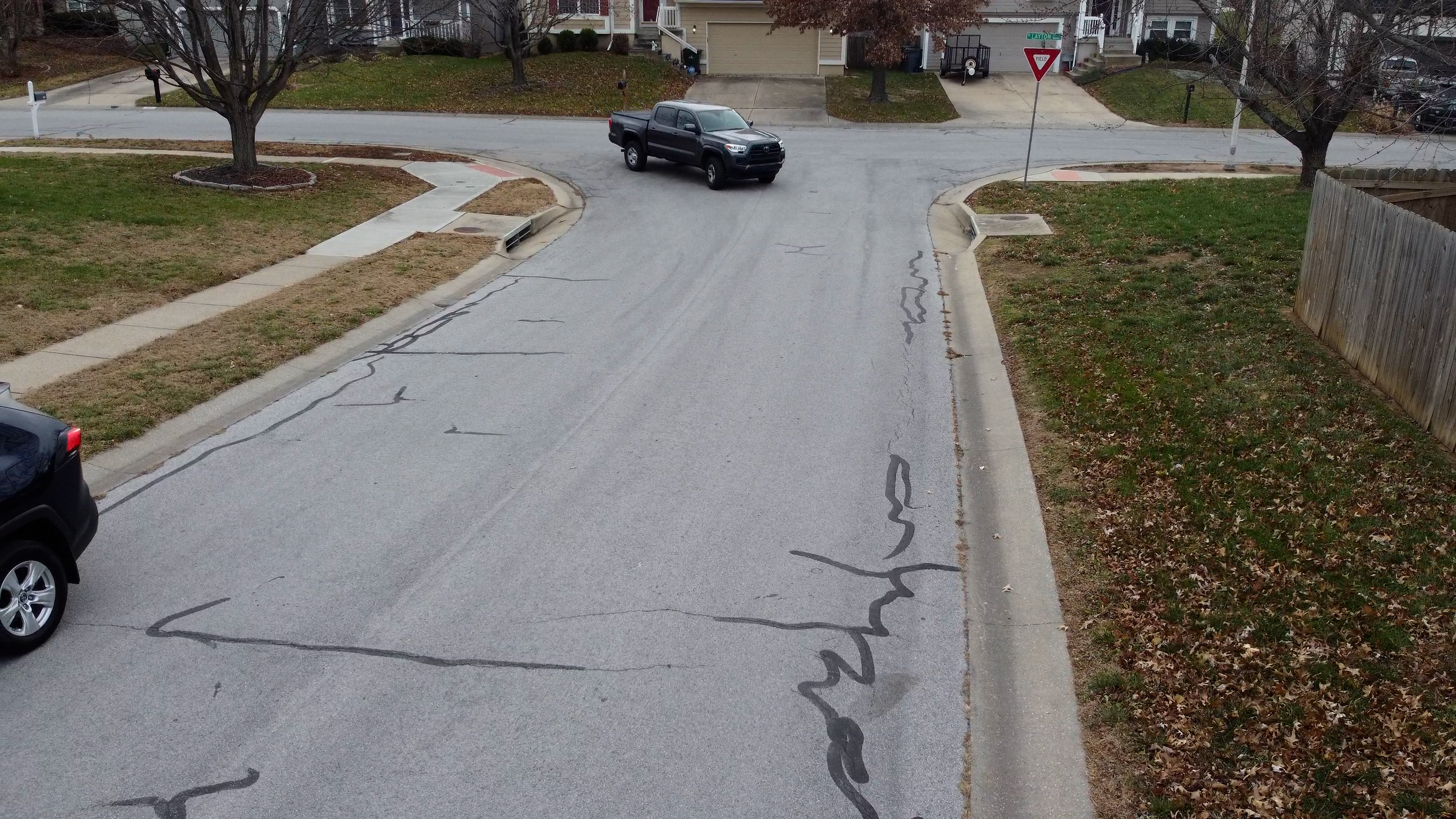
Common questions
No pavement treatment can eliminate all movement. PressurePave® is designed to help manage that movement while keeping stress-absorbing material beneath the driving surface.
Initial traffic may typically return in approximately 30 minutes, depending on weather, material reaction, roadway conditions, and project requirements.
PressurePave® may be considered for substantially distressed pavements down to approximately PCI 40 when structural and subgrade conditions remain suitable.
No. Injection, formation of the stress-absorbing mastic layer, and application of the MAQS® surface occur during one continuous PressurePave® operation.
Bring us the difficult road
Share the roadway condition, PCI information, photographs, traffic level, and project goals. Donelson Construction can help determine whether PressurePave® belongs in the conversation.