
In the pursuit of cleaner fuels and greater fuel yield, petroleum refining has changed dramatically over the past several decades. Those advancements have produced major benefits for transportation fuels, but they have also changed what remains at the bottom of the barrel.
That matters to pavement engineers because asphalt binder—the black, sticky material that holds aggregate together—is derived from those heavy petroleum fractions.
As refineries become more sophisticated at extracting valuable products from crude oil, questions have emerged about how changes in the remaining material can affect asphalt flexibility, oxidation, cracking resistance, and long-term pavement life.
From Crude Oil to Pavement
How Asphalt Production Changed With Modern Refining
Historically, producing asphalt binder was comparatively straightforward. Crude oil was distilled, lighter products were separated, and the heavy residue remaining at the bottom of the process could become asphalt cement.
That residue contained large, complex hydrocarbons together with lighter oily fractions that contributed to the balance of stiffness, flexibility, adhesion, and workability needed from a paving binder.
Modern refineries are designed differently. Gasoline, diesel, jet fuel, and other higher-value products are the primary objectives, while asphalt represents a comparatively small residual product stream.
As refining technology advanced, additional processes were developed to extract more useful products from heavy petroleum fractions that might once have remained available for asphalt.
Extracting More From the Bottom of the Barrel
Processes such as catalytic cracking, hydrocracking, hydrotreating, solvent de-asphalting, and coking allow refineries to recover additional valuable material from heavy petroleum fractions.
Catalytic cracking breaks larger hydrocarbon molecules into smaller molecules that can contribute to fuel production. Hydroprocessing can further treat heavy oils under hydrogen, while also helping remove sulfur and other impurities to meet modern fuel standards.
Other processes can go even further. Solvent de-asphalting can extract useful oils from heavy residuum, while coking can thermally convert heavy material into lighter hydrocarbons and solid petroleum coke.
From a fuel-production standpoint, these technologies are extremely valuable. From the perspective of asphalt production, however, they can change both the quantity and chemistry of the residual material available for paving binder.
Binder Chemistry
Why the Balance Between Asphaltenes and Maltenes Matters
Asphalt chemistry is extraordinarily complex, but one useful simplified model divides the binder into two broad groups: asphaltenes and maltenes.
Asphaltenes are relatively large, heavy molecules that contribute stiffness and body to the binder. Maltenes include oily constituents such as saturates, aromatics, and resins that help provide mobility and viscoelastic behavior.
Pavement performance depends on maintaining an effective balance between these components. The binder must be stiff enough to resist deformation while remaining flexible enough to tolerate traffic loading, thermal movement, and pavement stresses.
When heavy-oil upgrading removes or alters too much of the softer fraction, the remaining material can behave more like an aged, stiffened binder.
Cleaner Fuels Can Change the Residual Material
Environmental regulations have also encouraged increasingly sophisticated treatment of petroleum products, particularly to reduce sulfur and other undesirable components in transportation fuels.
Processes such as deep hydro-desulfurization and hydrogen treatment are valuable for producing cleaner-burning fuels, but those processes can also influence the chemical characteristics of the heavy residual fractions.
The result is not that every modern asphalt binder is inherently poor. Rather, the source of crude oil, refinery configuration, processing history, blending, and modification can all influence the properties of the final paving binder.
What Happens on the Road?
Binder Aging, Oxidation, and Pavement Cracking
All asphalt binder ages.
Exposure to oxygen, heat, ultraviolet radiation, weather, and time gradually changes the binder's molecular structure. The material generally becomes harder and less flexible as oxidation progresses.
A newly paved asphalt road begins dark and comparatively resilient. Over time, the surface fades, the binder stiffens, and its ability to accommodate movement decreases.
Eventually, stresses produced by traffic, temperature cycling, shrinkage, or movement in the underlying pavement can exceed what the aged binder can tolerate.
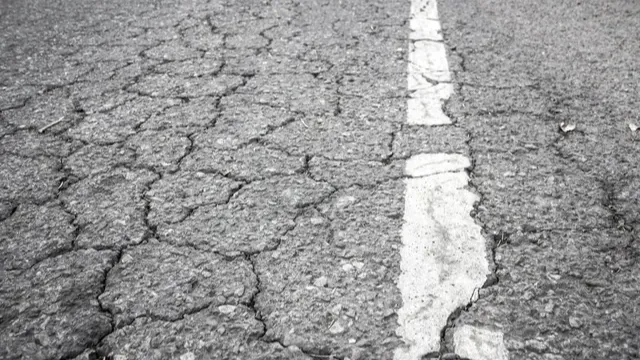
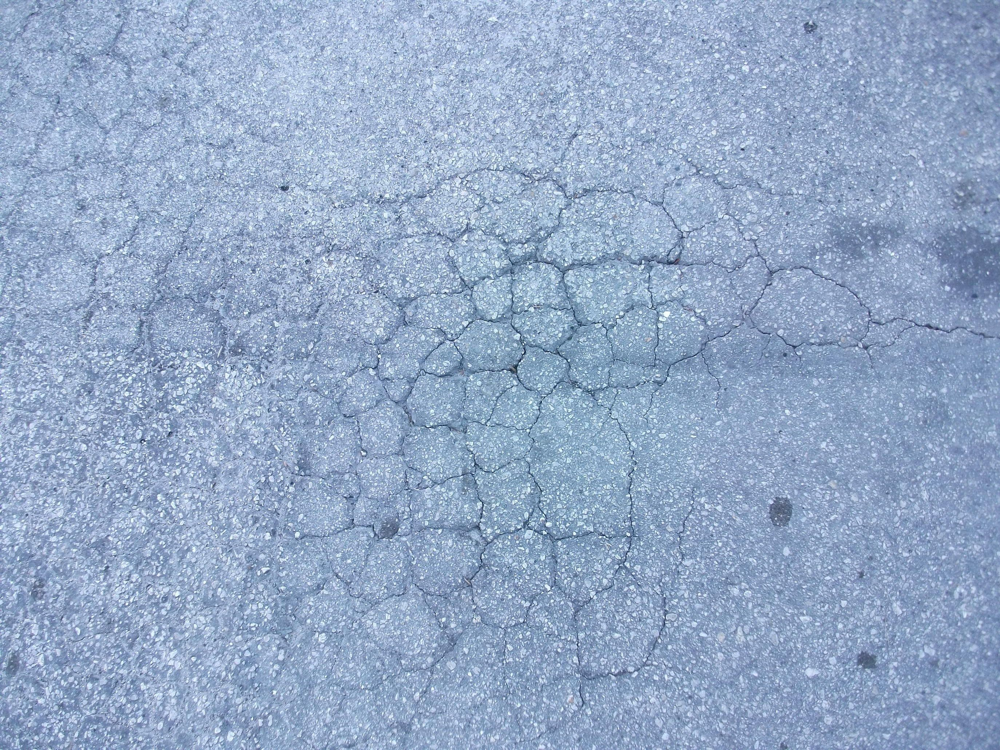
Cracking is one visible result.
The Same Binder Grade Does Not Always Tell the Entire Story
Pavement engineers have long recognized that asphalt binders carrying the same nominal performance grade can still differ in composition and long-term behavior.
A binder's crude source, refinery history, blending components, modifiers, and aging characteristics can influence performance beyond the information conveyed by a grade designation alone.
That is one reason the pavement industry has continued developing additional laboratory procedures for evaluating cracking, relaxation, aging, and mixture performance.
Faster Aging Can Change the Pavement Maintenance Cycle
If a pavement loses flexibility sooner than anticipated, the effects extend beyond visible cracking.
Agencies may need to intervene earlier with preservation, rejuvenation, sealing, rehabilitation, or resurfacing treatments. As cracking expands, water can gain additional pathways into the pavement structure and accelerate deterioration.
Advanced aging can also contribute to raveling as the binder becomes less effective at retaining aggregate at the pavement surface.
Over an entire road network, shortening rehabilitation cycles by even several years can have significant consequences for municipal maintenance budgets.
The Industry Responds
Performance Grading Changed How Asphalt Binder Is Evaluated
The asphalt industry has not ignored these challenges.
The development and widespread adoption of the Superpave Performance Grade system represented a major shift toward selecting asphalt binder according to expected pavement temperatures and performance requirements.
Laboratory procedures also simulate short- and longer-term binder aging so engineers can evaluate how asphalt properties change after exposure to conditions intended to represent production and service.
This helped move asphalt binder away from being viewed simply as a residual petroleum product and toward being treated as an engineered pavement material with specific performance requirements.
Engineering Responses
Strategies for Improving Asphalt Durability
Changes in binder composition do not mean pavement engineers are powerless. Materials science, mixture design, specifications, and pavement management provide several ways to address cracking and aging.
1. Polymer-Modified Asphalt
Polymer-modified asphalt incorporates materials such as styrene-butadiene-styrene and other modifiers into the binder to improve selected performance characteristics.
Polymer modification can increase elasticity and improve the binder's ability to tolerate strain, making it particularly useful where resistance to rutting, fatigue, or thermal cracking is important.
Modified binders generally cost more than conventional binders, but the additional performance can be valuable on heavily trafficked or otherwise demanding pavement applications.
2. Rejuvenators and Binder Additives
Another strategy is to introduce additives intended to restore some of the flexibility associated with lighter binder components.
Rejuvenators are frequently discussed in connection with reclaimed asphalt pavement because the binder contained in RAP has already experienced years of oxidation and aging.
Proper formulation and dosage are critical. A rejuvenator must improve cracking resistance without making the finished mixture excessively soft or vulnerable to other forms of distress.
For agencies evaluating these materials, long-term performance evidence is especially important.
3. Performance-Based Specifications
Modern pavement engineering is increasingly interested in evaluating how the complete asphalt mixture performs rather than relying exclusively on individual material specifications.
Balanced Mix Design is one example. The objective is to evaluate competing pavement risks—particularly rutting and cracking—and design a mixture capable of balancing those performance demands.
This approach gives producers additional flexibility to adjust binder, aggregate, recycled material, additives, and mixture proportions while still requiring the finished mixture to demonstrate acceptable performance.
4. Intervene Before Cracking Becomes Structural Failure
Material improvements are only one part of the solution. Pavement management also matters.
Once a pavement begins cracking, allowing water and environmental exposure to continue acting on the roadway can accelerate deterioration.
Preservation and rehabilitation treatments can help agencies intervene before surface distress progresses into more extensive structural failure.
The appropriate treatment depends on pavement condition. Lightly distressed roads may still be candidates for preservation, while roads with more advanced deterioration may require a stronger rehabilitation strategy.
Rehabilitation After Distress Develops
Where PressurePave® Fits Into the Conversation
PressurePave® approaches pavement deterioration from the rehabilitation side rather than attempting to change the original asphalt binder.
The system is intended for distressed pavement that still retains sufficient structural integrity to be rehabilitated.
During installation, PressurePave® pressure-injects material into cracks, voids, and distressed areas, creates a stress-absorbing mastic layer, and places a finished MAQS® driving surface during one continuous operation.
This does not reverse the chemistry or aging of the original asphalt. Instead, it provides a rehabilitation strategy for managing the consequences once cracking and surface deterioration have developed.
Long-Term Observation Matters
Whether evaluating a binder, mixture, additive, preservation treatment, or rehabilitation system, the real test ultimately happens on the road.
Laboratory testing provides critical information, but pavement performance must also be observed under years of traffic, temperature cycling, moisture, oxidation, and movement.
Donelson Construction continues to document older PressurePave® projects to observe how finished driving surfaces change over time and how pavement distress expresses itself after rehabilitation.
Pavement Materials Are Only Part of the Equation
Binder chemistry helps explain why asphalt becomes more brittle as it ages, but pavement deterioration is rarely the result of a single factor.
Traffic loading, water, temperature, pavement structure, construction quality, drainage, maintenance history, and environmental exposure all contribute to how a roadway performs.
Understanding those interactions allows engineers and public works professionals to move beyond simply repairing visible symptoms and toward selecting treatments based on why the pavement is deteriorating.
The Bigger Picture
Better Pavements Begin With Understanding the Material.
Advances in petroleum refining have produced cleaner fuels and dramatically improved the efficiency with which valuable products can be recovered from crude oil.
But pavement engineers must also understand the downstream consequences of changes in the heavy petroleum fractions used to manufacture asphalt binder.
Binder source, refining history, modification, mixture design, aging characteristics, construction quality, and pavement management can all influence how a roadway performs.
The response is not to reject modern asphalt. It is to understand the material more completely, specify for performance, test what matters, monitor roads over time, and intervene with the right treatment before deterioration becomes significantly more expensive.
When pavement professionals understand both the chemistry inside the binder and the conditions acting on the road, they are better equipped to build—and preserve—pavements designed for long-term performance.