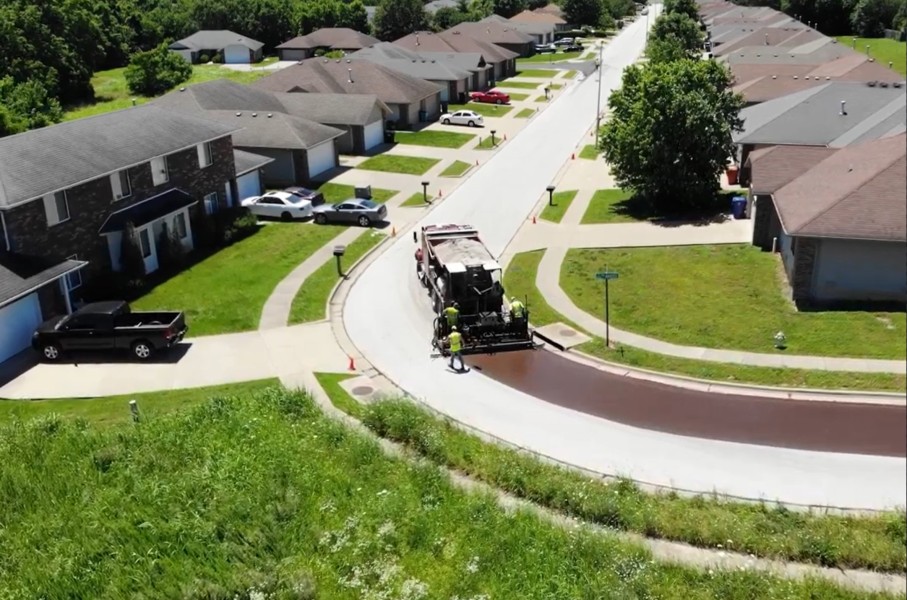
Asphalt resurfacing is a common solution for repairing damaged or aging pavement. However, rehabilitation strategies vary widely in the amount of material, energy, hauling, equipment, and waste involved in completing the work.
PressurePave® offers a different approach. Rather than removing substantial portions of the existing roadway, the system works with the pavement already in place and applies a new rehabilitation system over the existing surface.
See the Environmental Story
Rehabilitation Can Use Less Than Reconstruction.
See how PressurePave® can reduce material removal, hauling, energy demand, and waste compared with more intensive pavement rehabilitation strategies.
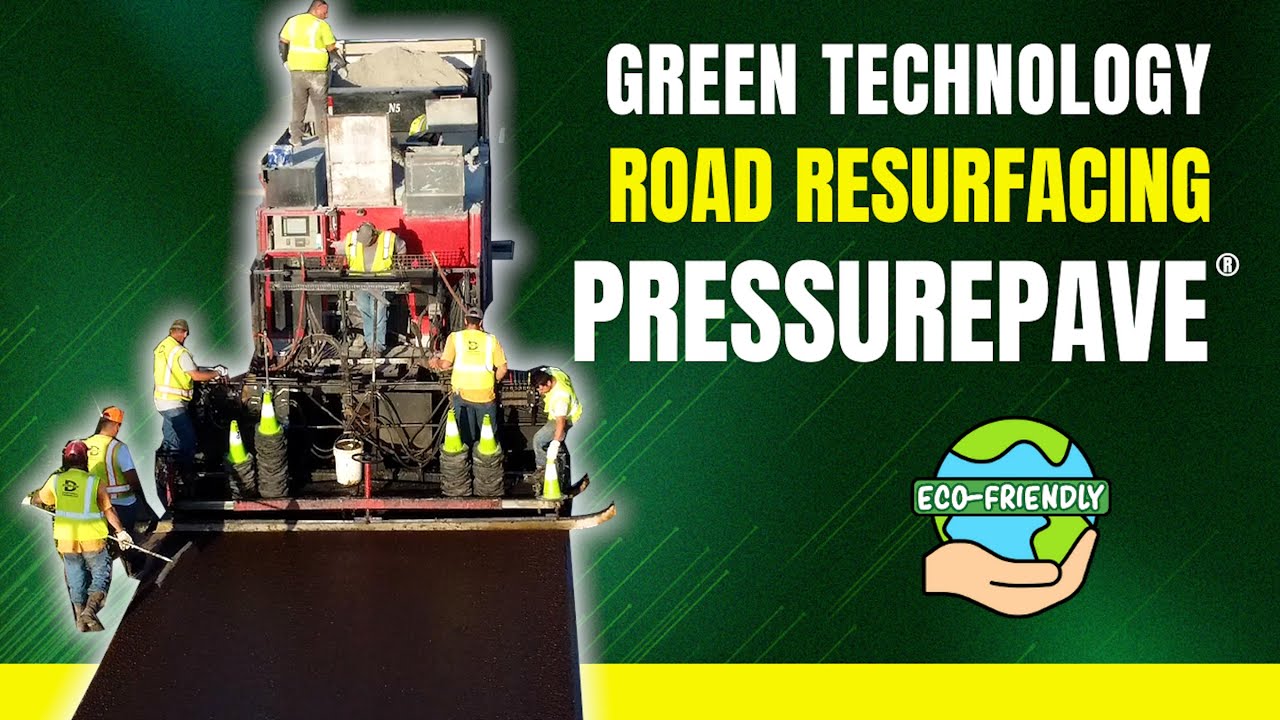
Explore how material use, energy, hauling, and pavement preservation can influence the environmental footprint of a roadway project.
1. Lower Emissions During Application
PressurePave® relies on quick-set chemistry that uses water evaporation during the curing process.
The original article notes that this process does not emit volatile organic compounds during curing, while traditional hot asphalt processes can involve additional emissions associated with heating, production, hauling, and placement.
2. Reduced Pavement Removal and Waste
Conventional rehabilitation can involve removing portions of the existing pavement before replacement material is installed.
That process requires excavation, trucking, handling, and either recycling or disposal of the removed material.
PressurePave® is applied over the existing pavement, which allows more of the roadway already in place to remain part of the finished rehabilitation system.
3. Long-Term Pavement Benefits
PressurePave® is designed to extend the useful life of distressed asphalt pavement by treating existing cracking, reducing water infiltration, and applying a durable finished driving surface.
Extending pavement life can reduce the frequency of future rehabilitation cycles and the material, energy, equipment, and traffic disruption associated with repeating major roadway work.
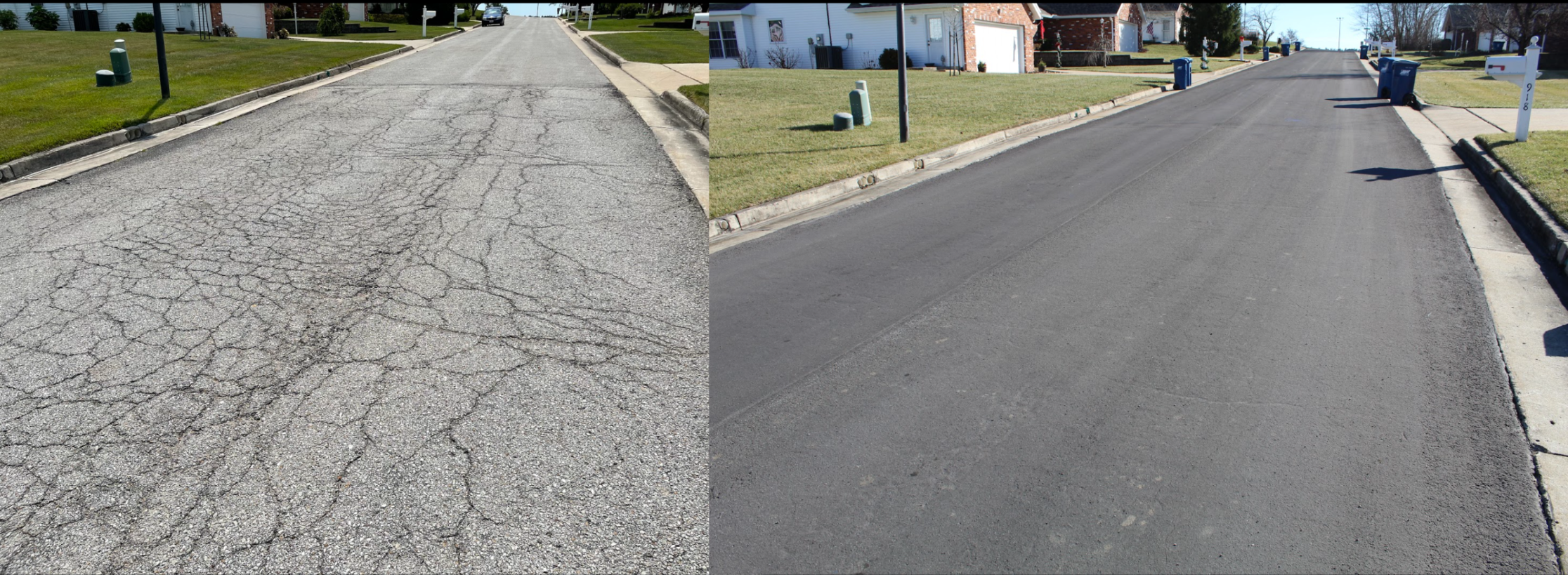
Preserving More of the Roadway Already in Place
One of the central ideas behind pavement preservation and rehabilitation is to make effective use of infrastructure that already exists.
When an existing roadway still has sufficient structural integrity, removing and replacing large quantities of pavement may not always be the only available strategy.
PressurePave® is intended for candidate roads where the pavement can still be rehabilitated rather than completely replaced.
Durability Is Part of Sustainability
A treatment that requires fewer resources initially is only useful if it also provides meaningful pavement performance.
That is why environmental efficiency should be evaluated alongside service life and roadway condition over time.
Donelson Construction continues to monitor older PressurePave® surfaces to evaluate how they perform after years of traffic, weather, and pavement movement.
A More Resource-Efficient Approach to Pavement Rehabilitation
Overall, PressurePave® offers municipalities another approach to rehabilitating distressed pavement while preserving more of the roadway already in place.
Reducing pavement removal, material replacement, hauling, and repeated rehabilitation cycles can help lower the resource demand associated with maintaining a roadway network.
For agencies balancing pavement performance, cost, community disruption, and environmental goals, treatment selection becomes an important part of building a more sustainable infrastructure program.